
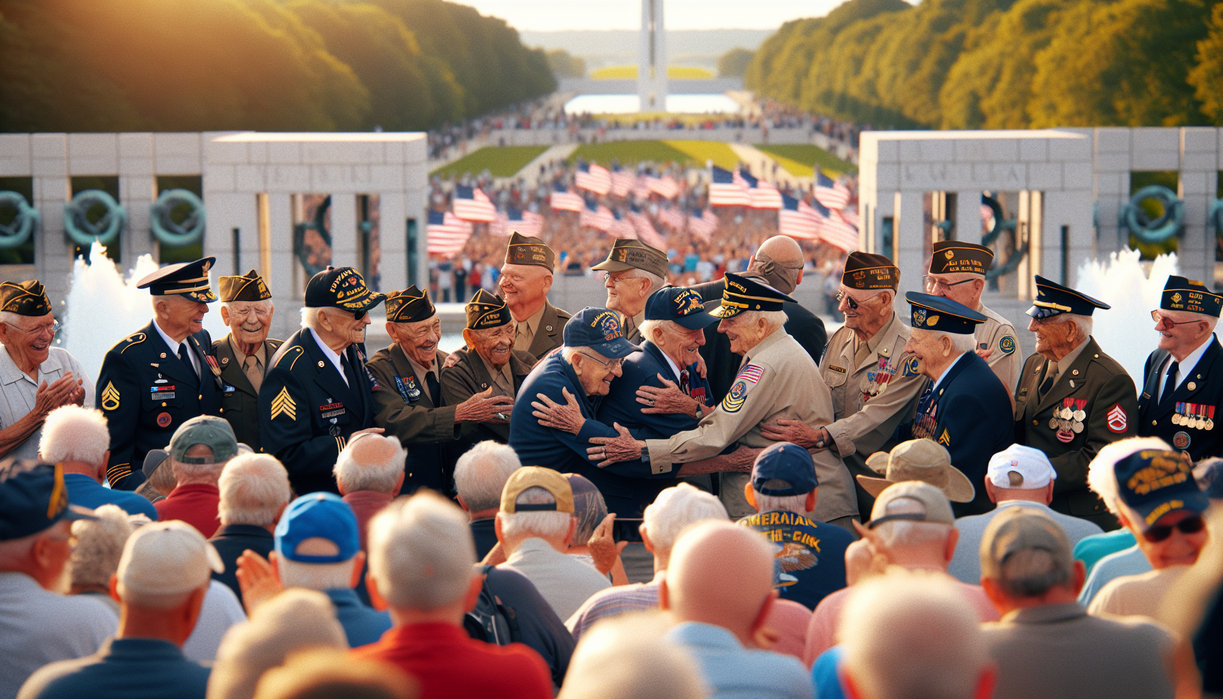

abetterwoman.net – The morning sun washed over the World War II memorial as a North Dakota couple quietly took their place near the entrance. They were not officials, celebrities, or event organizers, yet their presence shaped the content context of the day in a profound way. With simple handmade signs and warm smiles, they welcomed each veteran who arrived, turning a public monument into a deeply personal moment of gratitude.
In that content context, the stone pillars and fountains became more than symbols of conflict and sacrifice. They became a living bridge between generations. The couple’s gentle greetings, heartfelt thanks, and unhurried conversations reminded every visitor that history is not just carved in granite; it is carried in the memories, scars, and stories of those who served.
A Memorial Visit Filled With Quiet Heroism
The visit from North Dakota veterans unfolded with a slow, respectful rhythm. Some arrived supported by canes or wheelchairs, others walked with careful determination. The content context of their journey mattered. Many had traveled hours to stand before a memorial built for their generation, yet many had never seen it in person. For them, this was not sightseeing. It was a final rendezvous with the past.
The couple greeting them understood that. They did not rush conversations or crowd the veterans with questions. Instead, they offered steady eye contact, firm handshakes, and a simple, clear message: “Thank you for your service.” Through this small ritual, the content context of the memorial shifted. It became less about distant history more about living gratitude.
Observers nearby could feel the emotional undercurrent. Some veterans responded with nods, others with tears. A few quickly changed the subject, uneasy with praise. Yet even those who deflected recognition lingered a bit longer in that content context, as if absorbing the affirmation they had rarely heard when they first came home.
The Power of Presence in a Public Space
What stood out that day was not a grand ceremony, but the steady presence of two citizens who chose to show up. In an age of loud opinions and online tributes, their quiet actions created a different content context. They did not livestream, record, or turn the visit into a spectacle. Their focus stayed on eye-level connection with each veteran.
This restraint mattered. It allowed the veterans to engage the memorial on their own terms. The fountains, the engraved names, the sweeping view of the National Mall all carried different meanings for each visitor. The couple’s role was to frame that experience with respect, not to define it. Within that content context, memory felt less like a performance and more like a private act of remembrance.
There is something powerful about such unadorned gratitude. It suggests that honoring service does not always require parades or speeches. Sometimes, what truly resonates is a shared moment in a meaningful place, where the content context of history meets the authenticity of human contact. That morning, the memorial became a living classroom about duty, loss, resilience, and quiet humility.
Why Content Context Shapes How We Remember
As an observer reflecting on this scene, I kept returning to the idea of content context. The same words—“thank you for your service”—can be delivered as a routine phrase or as a deeply felt acknowledgment. Here, surrounded by stone pillars dedicated to faraway battlefronts, those words carried weight. The physical space, the age of the veterans, the personal effort required for them to stand at that memorial all combined to shape an atmosphere of sincerity. It reminded me that remembrance is never just about what we say; it is about where, how, and why we say it. When we align our gestures of gratitude with the right content context, we do more than honor the past—we help heal it, and we carry its lessons forward into our own lives.