
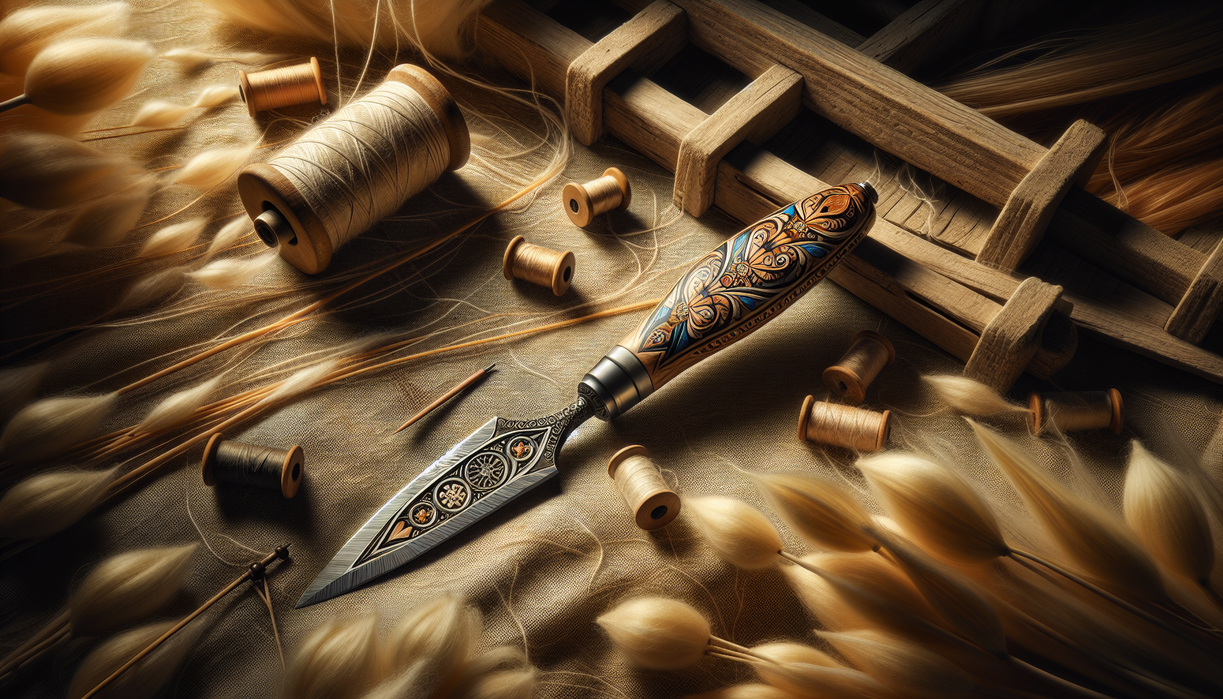

abetterwoman.net – Antiques & collecting often celebrates gleaming silver, ornate porcelain, and grand furniture, yet some of the most fascinating stories hide inside humble tools. Among these overlooked objects, the flax or scutching knife stands out as a simple wooden blade that once powered entire rural economies. At first glance, it might resemble a rustic toy or a folk-art wall hanger, especially when the surface carries faded paint or decorative touches.
Look closer, though, and that same unassuming piece reveals the hard work of past generations. In the world of antiques & collecting, scutching knives bridge the gap between agricultural labor and domestic craft. Understanding how these tools functioned, why they were made, and what to look for today can turn an odd-looking stick with a flat edge into a prized, story-rich acquisition.
What Exactly Is a Scutching Knife?
A scutching knife is a flat wooden blade, usually with a shaped handle, used to process flax or other plant fibers. During traditional linen production, flax stalks were retted, dried, then broken to loosen the woody core. After this step, the scutching knife came into play. The operator drew fiber bundles over a vertical board and struck or scraped them with the blade to remove remaining woody fragments, known as shives.
This method appears simple, yet it required skill, rhythm, and strength. In many rural communities, scutching took place in small workshops or farm outbuildings, often as a seasonal activity. For lovers of antiques & collecting, these knives embody that entire chain of effort behind a seemingly ordinary linen tablecloth or shirt. Every nick and wear mark on the blade hints at countless hours of labor.
Because scutching relied on repetitive motion, the tool needed to feel comfortable in the worker’s hand. Handles might be rounded, faceted, or slightly flared. Blades can appear straight, gently curved, or paddle-like. Some examples feature subtle shaping to balance weight and improve grip. To a collector, those variations are not trivial; they help identify regional habits, individual makers, or specific flax-processing traditions.
From Working Tool to Decor Piece
Many scutching knives found today in antiques & collecting circles wear layers of paint or varnish. At times, this finish was practical, intended to protect the wood against moisture. In other cases, later owners added colorful paint once the tool retired from active duty. A once-essential implement might hang above a fireplace or on a barn wall as a nostalgic reminder of vanished work. This decorative afterlife can confuse newcomers who assume a painted blade indicates a purely ornamental purpose.
In truth, scutching knives straddle two worlds: they are both craft tools and folk-art canvases. Some display carved initials, dates, or simple geometric motifs. Others carry floral patterns or bright colors similar to those seen on rural furniture. For antiques & collecting enthusiasts, that blending of function and personal expression is part of the charm. It invites research into who owned the tool, what region it came from, and how local style influenced its final appearance.
From a personal perspective, I find this transition deeply moving. An object built for hard, repetitive use becomes an heirloom, then a conversation piece on a collector’s shelf. The same blade that once sent flax fibers flying now sparks curiosity at a flea market or antiques fair. That shift illustrates why antiques & collecting should never focus solely on luxury items; everyday tools can reveal far richer stories about real lives.
Identifying Genuine Scutching Knives
Spotting an authentic scutching knife in a crowded antiques & collecting market requires attention to form and surface. Look for a flat blade, usually wider near the end, with evidence of wear along the working edge. Old examples often show rounded corners created by prolonged use, not by sandpaper. The handle typically extends straight or with a gentle curve from the blade, without sharp transitions that would fatigue the hand. Original patina should feel soft and varied, not like uniform modern stain. Painted decoration may be later, yet that does not always diminish value if it reflects folk-art tradition. Above all, trust both research and instinct; when an object’s proportions, wear, and history align, you often sense authenticity before you can fully explain it.
Why Scutching Knives Matter in Antiques & Collecting
In a marketplace flooded with mass-produced vintage items, scutching knives remind us that manual skill once shaped nearly every household textile. Each linen sheet or towel required hours of physical effort before weaving even began. For those devoted to antiques & collecting, these tools provide tangible evidence of that invisible labor. Owning one is like holding a bridge between agriculture, industry, and domestic life.
They also highlight regional diversity. In flax-growing areas of Europe and North America, communities developed slightly different designs. Some knives appear sleek, almost elegant, with gently tapered blades. Others look more rugged, hewn from whatever timber was readily available. This variety offers fertile ground for comparative study. As more collectors record measurements, wood types, and local stories, a richer typology emerges for future research.
Another reason they matter is educational impact. Museums and local history groups often use scutching knives to demonstrate pre-industrial linen production. Visitors rarely forget the sound of wood striking fiber or the feel of the tool in hand. As someone who values antiques & collecting for its storytelling power, I see scutching knives as perfect teaching props. They condense complex economic and social changes into one artifact that people can see, touch, and discuss.
Condition, Rarity, and Value
Assessing value in antiques & collecting always requires nuance, and scutching knives are no exception. They remain more common than some specialized tools, especially in regions with strong flax traditions. However, many surviving examples show heavy wear, cracks, or invasive restoration. Pieces that balance honest use with structural soundness attract more interest. Signs of genuine working life—burnished edges, old repairs, or smoke-darkened surfaces—often enhance appeal when they feel authentic rather than staged.
Rare features can elevate a piece. Unusual shapes, dated inscriptions, maker’s marks, or finely carved handles add layers of significance. Provenance also matters. A knife with documented connection to a known family, farm, or linen workshop carries more narrative weight. I have encountered modest-looking examples whose value soared once archival photos or letters confirmed their story. In antiques & collecting, documentation frequently bridges the gap between “old object” and “important survivor.”
Price ranges tend to remain accessible compared with high-end furniture or silver. That accessibility makes scutching knives ideal entry points for younger or budget-conscious enthusiasts. Buying one offers a way to join the antiques & collecting community without overwhelming expense. The real investment lies in learning: understanding flax processing, visiting regional museums, and talking with older residents who still remember these tools in use or on family walls.
How to Display and Care for Scutching Knives
Once a scutching knife joins your antiques & collecting lineup, thoughtful care will preserve both wood and story. Avoid aggressive cleaning, since sanding or harsh chemicals strip away clues to age and use. Gentle dusting and minimal, archival-grade wax—if needed—usually suffice. For display, wall mounting works well, especially near other rural tools or textiles, but keep pieces away from direct sunlight and strong heat sources to prevent warping. Consider pairing a knife with a short written label explaining flax processing, perhaps alongside a small bundle of dried flax or a sample of handwoven linen. This contextual framing transforms a simple wooden blade into a complete micro-exhibit that invites questions rather than silent admiration.
Personal Reflections on Humble Tools
When I explore antiques & collecting fairs, I often see people hurry past boxes of worn tools in search of flashier treasures. Yet those boxes frequently hold the most resonant stories. Scutching knives, with their plain forms and modest price tags, challenge our assumptions about what deserves attention. They invite us to honor work once considered too ordinary to document. That shift in focus feels important in a world where many objects now arrive finished, sealed, and anonymous.
Handling a scutching knife encourages a kind of imaginative empathy. You can picture the rhythm of the worker’s arms, hear the scrape across the fiber, sense the seasonal urgency before harvest or winter. Antiques & collecting becomes less about possession and more about connection. Instead of asking, “How much is this worth?” the better question becomes, “Whose daily life does this reveal?” That mindset transforms a simple collection into a personal archive of human effort.
In my view, scutching knives also highlight the fragility of material culture. Countless examples were burned, thrown away, or repurposed as kindling once industrial methods replaced manual flax work. The pieces that survived did so mostly by accident or sentiment. Recognizing that contingency should make us more attentive custodians. When we rescue such tools from obscurity, we are not just preserving wood; we are safeguarding entire chapters of everyday history.
Tips for New Collectors
If scutching knives spark your curiosity, start by reading widely about flax cultivation and linen production. Understanding process clarifies purpose, which then sharpens your eye during antiques & collecting excursions. Study photographs in museum catalogues and reputable online archives to internalize typical shapes and sizes. Once you feel familiar with standard forms, you can better spot oddities or early prototypes in the wild.
When buying, examine each piece in good light. Look for consistent aging, natural wear patterns, and signs of genuine use. Do not reject a knife simply because it carries later decorative paint, provided that layer has age and character. Ask sellers about provenance, even if they can only offer vague family stories. Those fragments sometimes lead to rewarding research projects. Keep a notebook or digital file with measurements, sketches, and photos of each addition to your antiques & collecting journey.
Above all, move at your own pace. It is tempting to accumulate quickly, yet a considered approach yields a more meaningful group of objects. Choose pieces that speak to you visually or historically, not just those that seem like bargains. Over time, your scutching knives might trace particular themes: regional styles, carving traditions, or transitions from tool to decor. That evolving pattern becomes a mirror of your own interests, turning the collection into an ongoing personal narrative.
A Reflective Closing
Scutching knives seldom headline glamorous auctions, yet their quiet presence enriches the entire field of antiques & collecting. These simple blades carry the memory of calloused hands, chilly barns, and the steady transformation of raw plant into refined cloth. By paying attention to such modest survivors, we acknowledge that history lives not only in palaces or museums but also in the tools once gripped by ordinary people. Choosing to preserve and study them is, in essence, a decision to honor work that once went unnoticed. That decision can reshape how we view our own everyday objects, encouraging us to look past surface gloss toward deeper stories hidden in plain sight.