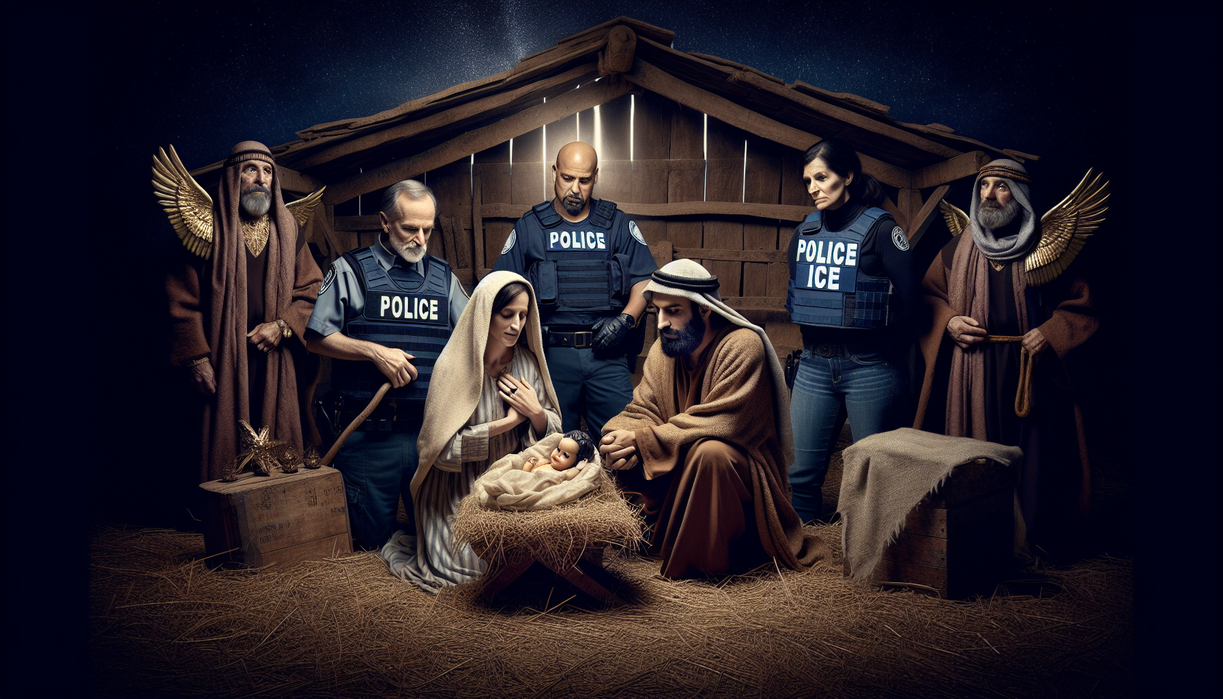

abetterwoman.net – When a quiet church nativity makes local news, you know something unusual has appeared on the lawn. In Claremont, a United Methodist congregation reimagined the Christmas story as a scene from today’s headlines, placing a Latino holy family face to face with an ICE officer. The display pushes viewers to see ancient Scripture through the lens of contemporary migration news, asking hard questions about faith, borders, and belonging.
This news story does more than report on a seasonal decoration; it probes how we remember Jesus himself. Christians often celebrate a serene manger scene, yet the biblical narrative describes a family on the run from state violence. By staging a modern border encounter, the church invites onlookers to revisit that history, connect it with current immigration news, and wrestle with what love of neighbor really demands.
News From a Church Lawn: A Nativity as Protest
The Claremont display looks familiar at first glance: Mary, Joseph, and baby Jesus gathered close, haloed by soft light. Then the twist appears. The figures have brown skin, their clothing resembles modern migrant attire, and an ICE officer stands nearby. Instead of distant Bible times, this nativity inserts the holy family into today’s immigration news cycle, almost as if they just crossed a desert or arrived at a shelter.
Public reaction, reported in local news coverage, shows how powerful imagery can be. Some passersby describe the scene as moving, a reminder that sacred stories speak to real lives. Others call it disrespectful or “too political” for a church lawn. Yet the original gospel accounts already describe rulers, decrees, and dangerous travel. The Claremont church simply translates those elements into the language of current news.
As an observer, I see this not as a stunt but as visual theology. The display claims Jesus was not only poor but also effectively a refugee, fleeing murderous power. That reading lines up with the flight to Egypt depicted in Christian tradition. When you compare that story with news images of families seeking asylum, the parallels feel less like a political argument and more like a stark reminder: faith narratives unfold inside history, not outside it.
From Bethlehem to Border News: Why the Story Still Stings
Why does this particular news story draw such strong responses? Because it exposes how we prefer our holidays free from discomfort. Many want Christmas to stay nostalgic and safe, full of carols, lights, familiar rituals. A nativity that echoes hard news about ICE raids or asylum hearings disrupts that mood. It insists that worship cannot be sealed off from human suffering playing out at real borders today.
The Claremont display taps into a long Christian tradition of locating Jesus among the vulnerable. For centuries, artists have painted Mary and Joseph as peasants, workers, or members of marginalized groups. This version simply updates the visual language for an era saturated with immigration news. When we see a brown-skinned holy family watched by an armed official, we are forced to ask who receives welcome and who hears the word “no.”
I believe this is exactly why such art belongs on the front page of local news rather than hidden inside a sanctuary. Religious symbols carry enormous cultural weight. When churches confine them to private comfort, they lose prophetic edge. By moving this news-making nativity outdoors, the congregation turns theology into public conversation. Whether you applaud or object, you cannot pass by without forming an opinion about migrants, borders, and the kind of world you want.
News, Faith, and a Final Question
Ultimately, the Claremont nativity might be remembered less as seasonal controversy and more as a turning point in how churches engage with immigration news. It suggests that faith communities can no longer speak of Bethlehem without noticing border buses, detention centers, and asylum courts. You do not need to agree with every artistic choice to recognize the central challenge: if Jesus arrived today, poor, brown, and on the move, would he encounter a stable or a locked gate? The answer we give, in policy debates and personal attitudes, reveals what we truly worship when the Christmas lights go dark.