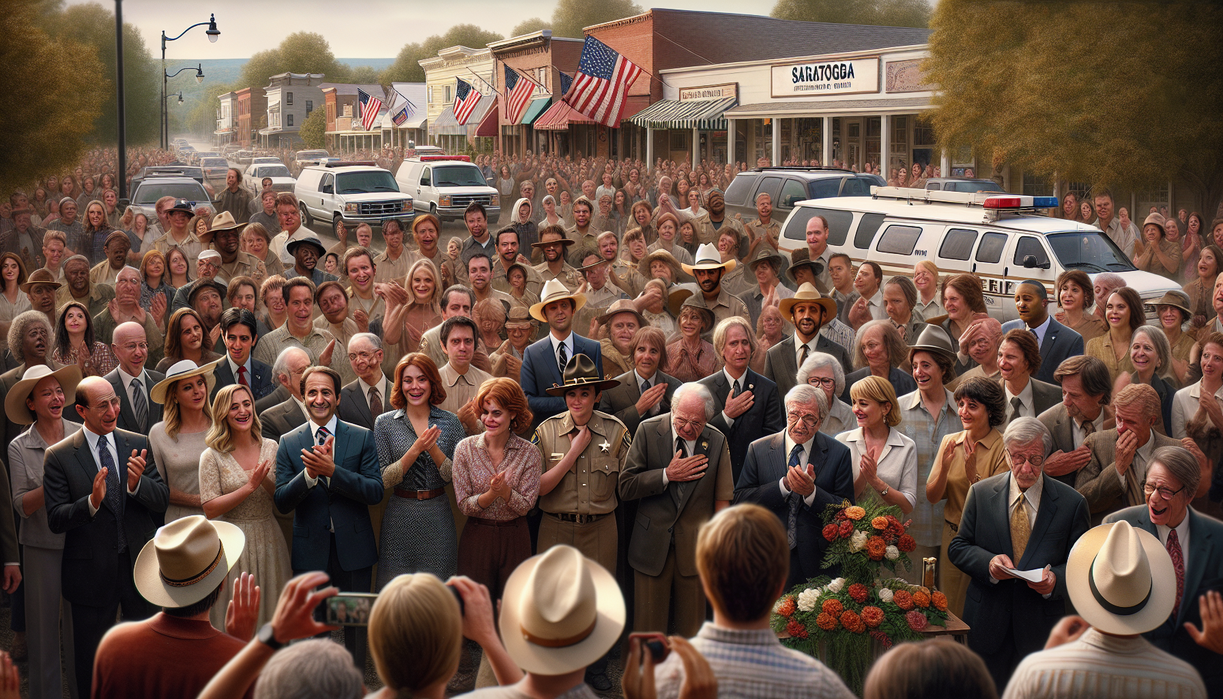

abetterwoman.net – Local news in Saratoga County rarely goes by without the familiar presence of Sheriff Michael Zurlo. After nearly five decades in uniform, his final year in office has moved quickly, giving residents a chance to look back on an era where one man’s steady leadership became part of the daily rhythm of their local news. His story is less about a title on his badge and more about a lifetime woven into the fabric of a community.
As Saratoga County prepares for life after Zurlo’s tenure, local news outlets are telling the story of a public servant who never treated this role as just another job. He often says, “I love this job,” not as a slogan, but as a summary of decades spent listening to people, showing up at difficult moments, and trying to leave the county a little safer than he found it. His departure marks a turning point for the region and offers an opportunity to ask what long-term service really means.
From Rookie Deputy to Fixture of Local News
Zurlo’s journey began long before his name appeared regularly in local news headlines. He started as a young deputy during a very different era for Saratoga County law enforcement. The tools were simpler, expectations lower, yet the stakes felt just as high. Over time, neighbors came to recognize him not only as a lawman, but as a familiar face at community events, school functions, and late-night calls when problems refused to wait until morning.
Local news cameras captured his rise through the ranks, though his approach stayed grounded. He built a reputation for calm responses during chaotic situations. Colleagues recall a leader who preferred walking the halls, visiting the jail, and speaking directly with staff rather than hiding behind a desk. That practical style resonated with residents, who saw an official willing to stand with them during crises rather than observe from a distance.
His eventual election as sheriff formalized what many observers already sensed from years of local news coverage. Zurlo had evolved from rookie deputy into a symbol of stability. While sheriff’s races can turn noisy and partisan, he seemed to draw support across divides. Voters recognized consistency. They saw someone who had already spent years answering calls on their streets, not just promising change in glossy campaign mailers.
Local News as a Mirror of Community Trust
To understand Zurlo’s impact, watch how local news outlets told his story over time. Press conferences after major incidents showed a sheriff who chose straightforward language rather than jargon. When tragedies hit, his tone carried weight without theatrics. Reporters counted on him for clear information, even when answers were uncomfortable. That consistent accessibility built trust not only with journalists, but also with viewers following along at home.
Local news thrives on familiar characters, both heroes and critics. Zurlo became one of those recurring figures. Yet he never slid into celebrity mode. Instead, he used that visibility to highlight broader issues, such as addiction, mental health, road safety, and the strains placed on deputies. In doing so, he quietly reframed coverage. Stories shifted from crime alone toward context, prevention, and solutions.
My perspective as an observer of local news is that leaders like Zurlo act as a kind of anchor. When residents see the same face calmly addressing storms, protests, crashes, or court decisions year after year, it softens the emotional temperature. Consistency never makes every decision popular, yet it does offer a stable reference point. You know who will step up to the microphone when something serious happens. That familiarity matters more than we often admit.
The Quiet Cost of Long-Term Service
Nearly fifty years in law enforcement brings public recognition, but it also carries a quiet cost. Local news stories rarely capture the missed family moments, sleepless nights, or emotional weight of handling the worst days of other people’s lives. For a sheriff, those burdens compound over decades. Zurlo’s frequent insistence that he loved the job does not erase those costs; it sits alongside them, revealing a complex relationship with service.
When viewed through the lens of local news, his lengthy career looks like a highlight reel of big cases and major policy shifts. But if you read between the lines, you see something more human. You see a man aging along with his community. The rookie deputy becomes the seasoned sheriff, then the retiring elder statesman. Each chapter reflects changes in crime trends, technology, social expectations, even media scrutiny.
From my vantage point, the most striking part of Zurlo’s story lies not in any single headline, but in sustained commitment across eras. Serving through shifting political climates, changing public attitudes toward law enforcement, and evolving media landscapes requires adaptability paired with core principles. It means accepting that public praise will never fully match private sacrifice. That tradeoff defines many careers in public safety, yet few stretch across half a century.
How Local News Shapes a Sheriff’s Legacy
Local news will play a decisive role in how future generations remember Sheriff Zurlo. Archival footage, old interviews, and past articles form the raw material of his legacy. For many younger residents, those clips will stand in for direct experience. They may never have met him, but they will understand his influence through on-screen moments and written accounts. That reality places extraordinary importance on fair, nuanced coverage.
Balanced storytelling matters because long-serving officials rarely fit simple narratives. Over fifty years, no leader avoids every misstep. There were policy debates, controversial arrests, staffing challenges, and budget struggles that may resurface as historians review the record. Strong local news coverage acknowledges both strengths and shortcomings, rather than flattening a complex career into uncritical praise or harsh condemnation.
Personally, I see this as a test for modern journalism at the community level. Can local news outlets capture the full texture of a life in public service, rather than chasing only the most dramatic or conflict-driven moments? With Zurlo’s retirement, reporters have a chance to step back, examine long-term trends under his watch, and ask what changed for residents’ daily safety. That type of reflection elevates coverage beyond routine press releases.
What Comes After the Final Local News Interview
As Zurlo prepares to step away from the cameras, the final local news interview will not close the book on his impact. Instead, it opens a new chapter where his influence shows up indirectly: in the policies continued by his successors, the culture sustained within the sheriff’s office, and the community’s expectations for transparency. His departure forces residents to consider what they valued about his tenure and what they now demand from future leaders. It also encourages a more personal reflection: How do we evaluate a life devoted to public service? Perhaps the most honest answer lies somewhere between the warm farewell tributes and the quiet, untelevised moments where a veteran sheriff wonders whether he gave enough, learned enough, and prepared the next generation to carry the badge with the same steady resolve. In that tension between pride and humility, a legacy takes its true shape.